
Dog Proof Fence Designs for Alberta Homes Durable Styles, Height Tips, and Local Climate Solutions

A fence that works in July can fail in February. In Alberta, pet fencing has to handle more than a curious dog. It has to stand up to freeze-thaw cycles, drifting snow, dry prairie wind, muddy spring yards, and the occasional determined escape artist who treats the backyard like a puzzle.
The best design is not always the tallest or most expensive one. A reliable dog proof fence combines the right height, a secure bottom edge, strong posts, weather-ready materials, and a style that still looks good from the street. Whether the yard is in Calgary, Edmonton, Red Deer, Lethbridge, Grande Prairie, or on an acreage outside town, the same question matters: how does the dog try to get out?

Alberta yards need fences built for weather and behaviour
Alberta pet owners face a mix of conditions that can be hard on fences. A design that looks sturdy in the showroom may shift, heave, or open gaps after a few winters if the post system and materials are not suited to local soil and weather.
Common local challenges include:
Freeze-thaw movement
Soil expands and contracts as temperatures swing. Fence posts need proper depth, drainage, and bracing so panels do not lean or twist.
Snow buildup
Snowdrifts can reduce the effective fence height. A 1.5 m fence may feel much shorter when packed snow collects along one side.
Chinook winds and prairie gusts
Solid panels catch wind. In exposed areas, posts, rails, and fasteners carry more stress.
Spring mud and soft ground
Dogs that dig may find it easier to work under a fence when the yard is wet.
Wildlife and distractions
Rabbits, deer, coyotes, neighbourhood dogs, and walkers can trigger chasing, barking, jumping, or digging.
The fix is to design for the dog and the site together. A calm senior spaniel has different needs than a young husky, shepherd, terrier, or rescue dog with a strong prey drive. Walk the fence line and look for escape routes before picking a style.
A simple test helps. Ask where the dog is most likely to challenge the fence.
Escape habit | Design response |
Jumping or climbing | Taller fence, smooth interior face, no footholds |
Digging | Buried mesh, gravel trench, concrete mow strip, or L-footer |
Pushing through gaps | Stronger mesh, closer pickets, reinforced bottom rail |
Gate rushing | Self-closing hinges, double latch, inward swing |
Reacting to people or dogs | Privacy panels or partial visual screening |
Good dog proof fencing is less about one feature and more about closing every weak point.
Choose a fence style that matches the dog and the yard
Different fence types solve different problems. The best option depends on visibility, wind exposure, budget, maintenance tolerance, and the dog’s size and habits.
Wood privacy fencing gives strong screening and classic curb appeal
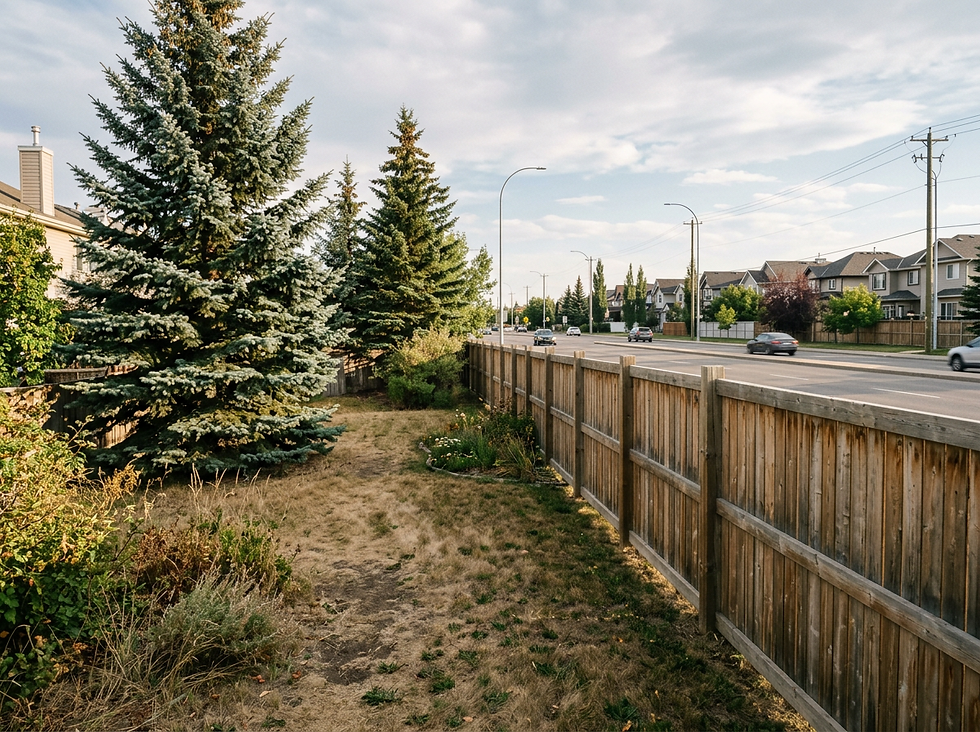
Wood is popular across Alberta because it looks warm and fits many home styles. Cedar and pressure-treated lumber are common choices. A full privacy fence blocks visual triggers, which can help dogs that bark at passersby or race along the property line.
For dogs, the most secure version has:
Vertical boards with minimal gaps
A smooth inside face to limit climbing
A reinforced bottom rail
Strong gate framing to prevent sagging
Posts set for local frost and soil conditions
Wood needs maintenance. Alberta sun can dry boards, while snow and moisture can affect lower edges. Staining or sealing helps, and good drainage at the base matters. Avoid leaving boards in direct contact with wet soil where possible.
A small gap at the bottom may look tidy, but it can invite digging. If the dog is a digger, add buried wire mesh or a gravel trench under the bottom edge.
Chain-link is practical, but it needs dog-focused upgrades
Chain-link is durable, affordable, and well suited to large yards or side runs. It lets in light and does not catch wind like a solid privacy fence. That can make it a strong choice for exposed lots.
The challenge is that some dogs climb chain-link. Others nose under the bottom, especially if the lower tension wire is loose.
For a more secure chain-link layout:
Choose a height that matches the dog’s athletic ability
Use a tight bottom tension wire
Add a bottom rail for extra strength
Consider privacy slats only where wind exposure allows
Install a dig guard along high-risk areas
Chain-link also works well as an inner dog run when the main yard fence is decorative. That gives active dogs a safe zone without changing the whole property line.
Ornamental steel or aluminum looks clean but needs spacing control
Ornamental metal fencing suits front yards, modern homes, and properties where views matter. Powder-coated steel is stronger than aluminum, while aluminum resists corrosion and is lighter. Both can work well in Alberta if installed with sturdy posts and weather-rated hardware.
The main issue for dogs is spacing. Small dogs can squeeze through wide pickets. Puppies can do it too, then get stuck as they grow.
Look for:
Narrow picket spacing
Puppy panels or lower mesh backing
A smooth top rail if the dog jumps
No decorative scrolls or mid-rails that create footholds
Secure gate latches that cannot be bumped open
This style is best for dogs that do not react strongly to what they can see. If the dog barks at every cyclist, an open metal fence may create more stress than freedom.
Vinyl and composite fencing reduce maintenance
Vinyl and composite fences appeal to homeowners who want a clean look with less staining or painting. They can handle moisture well, and many styles offer full privacy.
In Alberta, quality matters. Lower-grade panels may become brittle in extreme cold or flex in strong winds. Choose products rated for cold climates, and pay attention to post spacing and internal reinforcement.
For dogs, vinyl and composite panels offer a useful advantage: the surface is smooth. That makes climbing harder. The downside is impact damage. A large dog that repeatedly charges the same panel may crack or loosen weaker sections.
Use reinforced posts, strong rails, and a gate frame built for real use, not just occasional foot traffic.
Welded wire and farm-style fencing suit acreages and large runs
On rural properties, welded wire, field fence, and post-and-rail combinations can cover longer distances. These styles are common on acreages because they balance cost, visibility, and coverage.
For pets, the wire gauge and opening size matter. Large openings may not stop small dogs. Flexible wire can bow if a dog pushes on it every day.
A stronger design uses:
Heavy-gauge welded wire
Properly braced corner posts
A top rail or tensioned top line
Smaller openings near the ground
A buried apron where digging is likely
Acreage owners should also think about wildlife. A fence that keeps a dog in may not keep coyotes or other animals out. Supervised outdoor time and a secure dog run can add peace of mind.

Height, bottom security, and gates matter most
A beautiful fence fails if the dog can go over, under, through, or out the gate. These details deserve as much thought as the main fence material.
Pick a height based on snow and jumping ability
Fence height should match the dog, not just the neighbourhood standard.
As a general guide:
Dog type or behaviour | Practical fence height |
Small calm dogs | About 1.2 m may work |
Medium dogs | About 1.5 m is often more secure |
Large or athletic dogs | About 1.8 m is a better starting point |
Known jumpers or climbers | 1.8 m plus anti-climb design may be needed |
Local bylaws can limit fence height, especially in front yards or corner lots. Check before building. If extra containment is needed but a taller property fence is not allowed, a secure inner run may be the better solution.
Snow changes the picture. If drifts pile up against the fence, dogs can launch from the packed snow. In windy areas, keep snow cleared from high-risk corners and along gates where jumping is most likely.
Secure the bottom before the dog starts digging
Digging is one of the most common escape problems, especially for terriers, huskies, and bored young dogs. Alberta’s spring thaw can make the base of a fence easier to dig under.
Several bottom-edge designs work well:
Buried wire mesh
Attach galvanized welded wire to the bottom of the fence and bury it roughly 30 to 45 cm deep.
L-shaped footer
Run mesh down the fence and outward along the ground under soil or sod. This discourages dogs that dig right at the fence line.
Gravel trench
A trench filled with compacted gravel makes digging harder and improves drainage.
Concrete mow strip
A narrow concrete strip under the fence creates a clean, durable barrier. It also makes trimming easier.
Bottom rail reinforcement
A solid bottom rail helps stop pushing, bending, and small gaps.
Here is a simple cross-section idea for a dig-resistant fence base:
Fence panel
|
|
|____ bottom rail
|
| buried mesh
| 30 to 45 cm deep
|
Soil -------------------------
gravel or compacted base
For dogs that dig from boredom, fencing alone may not solve the full problem. Shade, enrichment, exercise, and supervised yard time reduce the urge to escape.
Build gates like security points, not afterthoughts
Many escapes happen at gates. A gate moves, sags, and gets slammed in winter when snow and ice build up. It needs stronger hardware than a fixed panel.
Use:
Self-closing hinges where practical
A latch mounted high enough to avoid nose bumps
A secondary clip or lock for clever dogs
A tight gap under the gate
A firm stop so the gate cannot swing the wrong way
Diagonal bracing on wood gates
If the dog bolts as soon as the gate opens, add a small vestibule or double-gate area. This is common in dog parks for a reason. Even a short side-yard “airlock” can prevent a stressful chase down the alley.

Design for durability without losing curb appeal
A pet fence should be strong, but it does not have to look like a kennel. Alberta homes range from newer suburban builds to older character houses and rural acreages, so the best-looking fence is one that feels intentional.
Use posts and hardware that handle seasonal movement
Posts carry the whole fence. In freeze-thaw climates, weak post installation can lead to leaning panels and sticky gates.
Good durability choices include:
Proper post depth for local frost conditions
Drainage material at the base where suitable
Pressure-treated wood, steel, or properly rated posts
Galvanized or coated fasteners
Corrosion-resistant hinges and latches
Braced corners and gate posts
Solid privacy fences need extra care in windy locations. If the yard is open to strong gusts, consider semi-private boards, shadowbox designs, or alternating slats that reduce wind pressure while still blocking some views.
Match materials to maintenance habits
Some homeowners enjoy staining a cedar fence every few years. Others want the least possible upkeep. Choose honestly.
Material | Best feature | Watch for |
Cedar | Warm look and natural resistance | Needs staining or sealing to keep colour |
Pressure-treated wood | Strong value and easy repairs | Can warp or check as it dries |
Chain-link | Durable and low maintenance | Needs upgrades for climbers and diggers |
Ornamental steel | Strong and polished | Open views can trigger reactive dogs |
Aluminum | Rust-resistant and light | Less impact resistance than steel |
Vinyl | Clean and low maintenance | Quality varies in cold climates |
Composite | Stable look and privacy | Higher material cost and heavier panels |
A mixed-material fence can solve more than one issue. For example, use privacy panels along the alley where distractions are high, then ornamental metal along a garden side where views matter. On acreages, combine post-and-rail with welded wire for a softer rural look.
Make the fence look like part of the yard
Aesthetics matter because fences take up a lot of visual space. Small design choices can make a secure fence feel welcoming.
Try these ideas:
Use horizontal boards for a modern look, but keep the inner face hard to climb
Choose black chain-link or black metal for a quieter visual profile
Add cap rails to wood fences for a finished top edge
Plant hardy shrubs inside the fence line, leaving room for maintenance
Use lattice only above secure solid panels, not where a dog can climb it
Match gate hardware to exterior lights or railings
Step panels cleanly on sloped yards rather than leaving large bottom gaps
For reactive dogs, aesthetics and behaviour can work together. A solid lower section with a more open top can reduce triggers while keeping the yard from feeling boxed in.

Solve common Alberta fence problems before they become escape routes
Even a well-built fence needs seasonal checks. Alberta weather can create small failures that dogs notice before people do.
Gaps appear under panels after frost or settling
Walk the fence line in spring. Look for lifted panels, washed-out soil, or low spots where a dog could squeeze through. Add soil, gravel, a bottom board, or mesh before the gap grows.
Gates stick in winter or sag in spring
Snow, ice, and soil movement can throw gates out of alignment. Keep the swing area clear, adjust hinges when needed, and make sure the latch still catches fully. A gate that only “sort of” latches will fail at the worst time.
Dogs patrol and wear a muddy track
Fence running can create ruts along the perimeter. This makes digging easier and looks rough. Add mulch, gravel, stepping stones, or a planted buffer where the dog patrols most. For high-energy dogs, more exercise outside the yard often helps.
Privacy fences catch too much wind
If panels loosen after windstorms, the design may be too solid for the site. Reinforce posts and rails, then consider vented sections in less sensitive areas. Semi-private panels can still reduce distractions while easing wind load.
Neighbouring dogs create fence fighting
Two dogs barking through a shared fence can damage boards and raise stress. Add visual screening, create a buffer zone, or use a secondary interior fence a short distance from the property line. Even 60 cm of separation can reduce direct contact.
The best fence is the one your dog cannot rehearse escaping
Fence design gets easier when it starts with the dog’s habits. A jumper needs height and a clean interior face. A digger needs a secure bottom. A reactive dog needs visual screening. A rural dog may need a dedicated run inside a larger property fence.
For most Alberta homes, the strongest results come from combining durable materials with practical details: weather-ready posts, tight gates, a bottom barrier, and a height that still works when snow piles up. Build for the climate, plan for the dog, and choose a style that suits the home. The yard will feel safer, calmer, and easier to enjoy through every season.


Comments