
How to Choose a Fence That Boosts Alberta Home Value

A fence can make a home feel finished before a buyer even steps inside. In Alberta, it also has to do real work. It needs to stand up to freeze-thaw cycles, chinooks, dry summers, heavy snow, prairie wind, and the everyday wear that comes with pets, kids, laneway traffic, and backyard living.
From a real estate perspective, the best fence is rarely the most expensive one. It is the one that fits the home, suits the neighbourhood, and looks like it will not become the next owner’s first repair bill.
A well-chosen fence can improve curb appeal, define outdoor space, add privacy, and protect the value of home upgrades such as landscaping, decks, patios, and gardens. The wrong fence can do the opposite. It can make a property look dated, cramped, neglected, or out of step with nearby homes.

Why buyers care about the fence before they tour the house
Real estate is emotional, but buyers still look for practical signs. A solid fence tells them the yard has been cared for. A leaning, patched, or stained fence raises questions.
Local real estate professionals often point to the same pattern: buyers notice outdoor boundaries quickly, especially in suburban Alberta markets where yards are part of daily life. A private, well-kept backyard can help a home feel more usable. That matters when buyers picture summer barbecues, a dog run, garden boxes, or a safe place for children to play.
A fence can add value in four main ways.
It improves first impressions.
A clean fence frames the property. It can make landscaping look sharper and help older homes feel more updated from the street or alley.
It adds privacy.
Privacy is a strong selling feature in dense neighbourhoods, corner lots, and homes backing onto paths, schools, or busier roads.
It defines function.
A fenced yard gives buyers a clear sense of how the outdoor space works. Separate zones for pets, play, parking, and entertaining can make a modest yard feel larger.
It reduces buyer objections.
If the fence is already in good shape, buyers do not have to budget for replacement right away. That can make the home feel more move-in ready.
That said, a fence does not automatically raise resale value dollar for dollar. The return depends on the lot, market, installation quality, and what buyers expect in that neighbourhood. For most homeowners, the goal is simple: choose fencing that makes the property easier to love and harder to dismiss.
Choose materials that can handle Alberta weather
Alberta is tough on exterior materials. Winter moisture, spring thaw, strong sun, and sudden temperature swings can age a fence faster than expected. A good material choice balances appearance, durability, maintenance, and neighbourhood fit.
Here are the most common options for Alberta fences and how they tend to perform from a real estate point of view.
Fence material | Best fit | Real estate appeal | Maintenance notes |
Pressure-treated wood | Privacy fences, family homes, suburban yards | Familiar, warm, and widely accepted | Needs staining or sealing over time |
Cedar | Higher curb appeal, feature yards, natural designs | Attractive colour and texture, often seen as a premium wood choice | Needs routine care to keep its colour |
Vinyl | Low-maintenance yards, newer subdivisions | Clean look, bright appearance, no painting | Can become brittle in harsh cold if quality is poor |
Composite | Modern homes, low-maintenance buyers | Polished look, good durability, often upscale | Higher upfront cost, check fading and warranty details |
Chain link | Side yards, dog runs, acreage, utility areas | Practical and budget-friendly, less private | Add privacy slats or landscaping if curb appeal matters |
Ornamental metal | Front yards, garden areas, estate-style homes | Elegant and open, strong curb appeal | Look for rust-resistant finishes |
Farm or rail fencing | Acreages, rural properties, large lots | Fits rural Alberta aesthetics | Needs strong posts and regular checks |
Wood remains a strong choice when it is well built
Wood is still one of the most popular choices because it suits many Alberta homes. It feels natural, offers strong privacy, and can be repaired board by board.
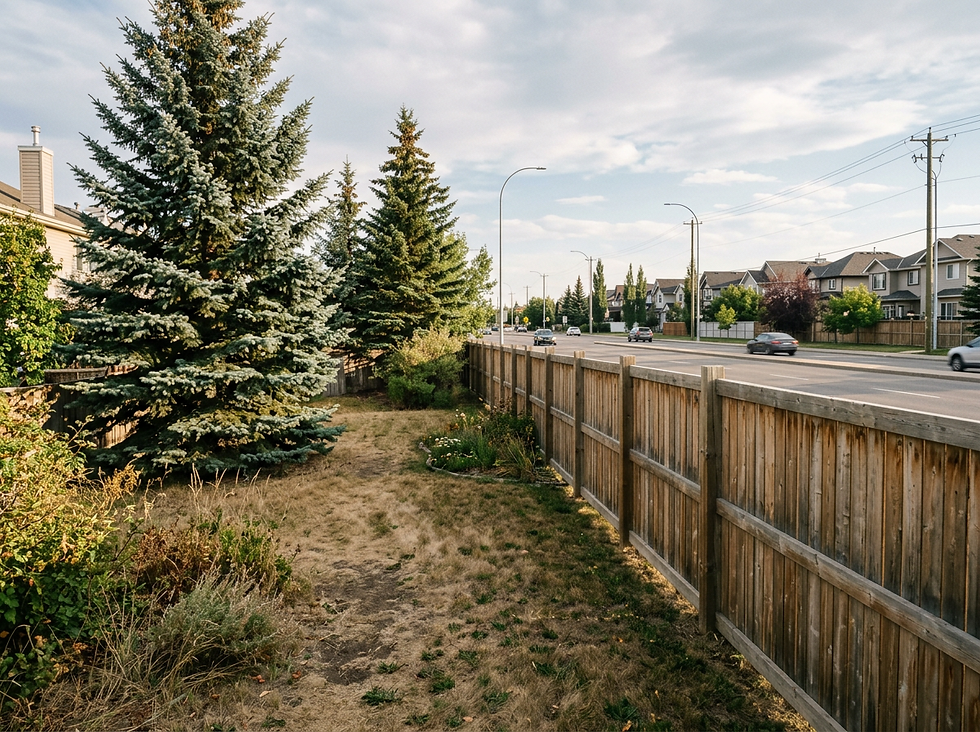
For resale, wood works best when it looks intentional. A straight fence with consistent boards, capped posts, and an even stain can make a backyard feel upgraded. A grey, warped, or mismatched fence can make buyers think about labour.
Pressure-treated wood is practical and common. Cedar costs more, but many homeowners like its warmer look. Cedar also tends to suit homes with natural landscaping, mature trees, or higher-end outdoor living spaces.
Vinyl and composite appeal to low-maintenance buyers
Vinyl and composite fences can help when the target buyer wants easy care. They do not need staining like wood, and they can give a newer home a clean, uniform look.
The caution is quality. Alberta cold can be hard on cheaper vinyl products. A flimsy panel that rattles in the wind can hurt curb appeal rather than help it. If choosing vinyl or composite, pick products rated for cold climates and make sure posts are installed correctly below frost depth.
Chain link is practical, but it needs the right setting
Chain link makes sense for many Alberta properties, especially side yards, rental properties, dog runs, and acreages. It is durable, cost-effective, and handles wind well because it does not act like a solid wall.
From a resale perspective, chain link is less about beauty and more about function. In a backyard where privacy matters, it may feel unfinished. Landscaping, privacy slats, or a mix of chain link and wood can improve the look without replacing everything.
Metal fencing can lift the look of a front yard
Ornamental steel or aluminum can add strong curb appeal. It works well for front yards because it defines the property without blocking the view of the home. This can be a smart choice when the house has attractive architecture, mature trees, or a landscaped entry.
Metal fencing suits neighbourhoods where front-yard privacy walls would feel too heavy. It also pairs well with low hedges, stone pillars, or a feature gate.

Match the fence style to the home and neighbourhood
The fence should look like it belongs. Buyers may not describe it that way, but they feel it quickly. A fence that clashes with the home can make the property feel less put together.
A modern infill may suit horizontal boards, dark metal accents, or composite panels. A mid-century bungalow may look better with clean vertical wood boards and simple caps. A rural acreage may call for rail fencing, page wire, or a combination of practical livestock-style fencing and landscaped yard fencing.
The key is to match the fence to the property’s real use and the expectations of the local market.
Privacy fencing works best in the backyard
A six-foot privacy fence can make a backyard feel like an outdoor room. That is a strong selling point in many Alberta communities, especially where homes sit close together.
Good privacy fence choices include:
Vertical wood boards with a cap rail
Board-on-board designs for fewer gaps
Horizontal wood for a modern look
Composite panels for a clean finish
Vinyl panels in neighbourhoods where that style is common
Be careful with very tall, dark, or solid fencing in small yards. It can make the space feel boxed in. If the yard is compact, consider lighter stain colours, varied landscaping, or a semi-private section near patios.
Front-yard fencing should frame, not hide
Front-yard fences affect curb appeal more than backyard fences. They appear in listing photos, street views, and first impressions.
Lower fences often work better at the front of the home. Ornamental metal, picket-style wood, split rail, or low horizontal fencing can define the lot while keeping the house visible.
Before building, check local bylaws. Many Alberta municipalities limit front-yard fence heights and may have rules for corner lots, sightlines, and boulevard areas.
Gates deserve more attention than they get
A weak gate can make an otherwise good fence feel cheap. Buyers notice sagging gates because they use them during showings.
A strong gate should:
Open and close smoothly
Have sturdy hinges and latch hardware
Be wide enough for yard equipment where needed
Match the style of the fence
Feel secure without looking industrial
If the home has alley access, RV parking, or a detached garage, the gate may be a major selling feature. In those cases, invest in better posts and hardware.
Build for climate, drainage, and long-term performance
A fence that looks good on day one still needs to survive Alberta’s weather. Installation quality matters as much as material.
The biggest issues tend to be movement, moisture, and wind.
Fence posts should be set deep enough for local frost conditions. If posts shift after a freeze-thaw cycle, rails can twist, gates can sag, and panels can lean. Buyers may see that as a sign of poor workmanship.
Drainage also matters. Fence boards that sit directly against wet soil or snow piles can rot faster. Leaving proper clearance at the bottom helps wood dry out. Sloping the grade away where possible can also reduce moisture damage.
Wind is another factor, especially in open subdivisions, rural lots, and prairie communities. Solid privacy panels catch wind like a sail. Strong posts, proper spacing, and quality fasteners help reduce future problems.
For wood fences, stain or sealant makes a visible difference. It protects the material and keeps the fence looking cared for. Natural greying can suit some designs, but uneven weathering, peeling stain, or blackened boards tend to read as neglect.

Use maintenance as a resale strategy
A fence does not need to be brand new to add value. It needs to look solid, clean, and cared for.
Before selling, homeowners often get more benefit from smart repairs than from a full replacement. Local homeowners who have prepared properties for sale often mention the same simple wins: replace broken boards, straighten loose sections, pressure wash carefully, refresh stain, and repair the gate.
Focus on what buyers can see and touch.
Replace cracked, warped, or missing boards
Tighten loose rails and hardware
Fix leaning posts if movement is obvious
Re-stain faded wood when the surface is ready
Trim grass and weeds along the fence line
Remove old wire, temporary patches, and mismatched panels
Make sure gates latch cleanly
If the fence borders a neighbour’s property, discuss repairs before starting. Shared fences can involve shared costs, shared expectations, and property line questions. For resale, neighbour disputes are the last thing anyone wants attached to a listing.
For older fences, avoid cosmetic cover-ups that will not last. Buyers and home inspectors can spot fresh stain over rotten boards or a gate that has been forced to hang straight. Honest repairs create more confidence.
A common real estate rule is that buyers do not need every outdoor feature to be expensive. They need it to feel cared for, safe, and consistent with the rest of the home.
Think like a buyer before spending money
The best fence decision starts with the likely buyer. A downtown property, a newer suburban home, and an acreage outside a smaller Alberta town will not benefit from the same fence.
For a family-oriented suburban home, privacy and durability may matter most. A six-foot wood fence with a secure gate can be a strong choice.
For a stylish inner-city home, design may carry more weight. Horizontal cedar, composite panels, or metal accents can support a more modern listing presentation.
For an acreage, buyers may care about boundaries, pets, equipment access, and snow drifting. Practical fencing, strong gates, and clear divisions between yard and pasture can matter more than decorative details.
For a rental or starter home, the smartest upgrade may be a simple, durable repair rather than a premium replacement. Clean, safe, and functional often wins.
This is where local real estate advice can help. Agents who regularly walk buyers through homes tend to know which outdoor features get positive comments and which ones raise objections. Homeowners also bring useful experience. Many will say the best fence is one they do not have to think about every weekend.
Questions to ask before choosing a fence
Before committing to a material or design, answer these questions:
What do nearby homes use, and does this choice fit the street?
Is privacy, security, curb appeal, or pet control the main goal?
Will the fence show in listing photos?
How much maintenance will future buyers expect?
Does the material suit Alberta winters and summer sun?
Are there municipal height rules or corner-lot sightline rules?
Have underground utilities been located before digging?
Will the fence improve the yard, or make it feel smaller?
The right answers will narrow the options quickly.

The best fence feels like part of the property
A fence that boosts Alberta home value is not just a boundary. It is part of the home’s first impression, outdoor function, and long-term maintenance story.
Choose materials that can handle the climate. Match the style to the home and neighbourhood. Build it well, maintain it honestly, and pay close attention to gates, posts, and visible street-facing sections.
The strongest alberta fences share the same traits: they look natural on the property, they hold up through changing seasons, and they make the yard feel more useful. When a fence does that, buyers see more than boards and posts. They see a home that has been cared for.


Comments